Research-Driven.
A complex and ever-changing investment landscape provides challenge and purpose for our team.
Paying the Premium, Rethinking the Protection
May, 2026 | Tara Elliott
Paying the Premium, Rethinking the Protection
Where downside protection may come from when bonds are less reliable as a hedge
Those familiar with our thinking might reasonably conclude that we believe “elevated uncertainty” is a permanent condition, and they wouldn’t be wrong. However, the nature of this uncertainty has changed over the past few years.
- Monetary Policy (2022-2023): In 2022, the Fed was way behind the curve in addressing COVID-era inflation, having dubbed it “transitory.” This set up the most aggressive tightening cycle in decades and a rate shock that produced double-digit losses in both stocks and bonds.
- Trade Policy (2025): Liberation Day tariff announcements surprised trading partners and markets alike, causing equities, Treasuries and the US dollar to sell off simultaneously.
- Fiscal and Geopolitical Pressures (2026): War in the Middle East and its consequences for commodity prices have collided with a growing Treasury debt burden. Again, both equities and bonds responded negatively to these developments initially and have been bouncing around as the markets try to price in a range of outcomes.
As you can see in Chart 1 below, intra-year drawdowns in the equity market are quite common and the 9% in Q1 2026 (prior to a sharp recovery on the last trading day of the quarter) is rather mundane by historical standards.
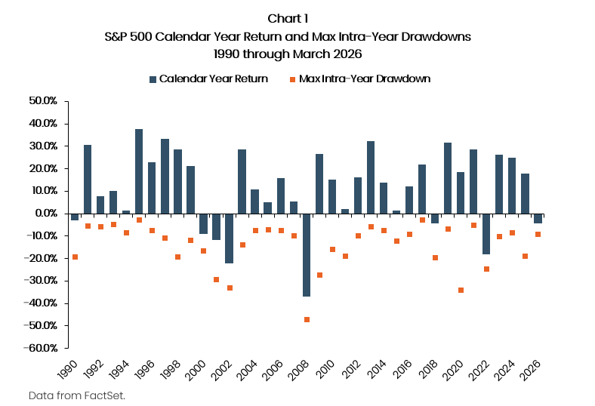
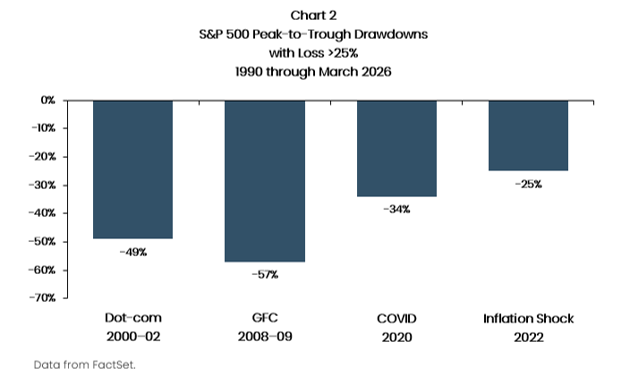
Chart 2 below shows that steep drawdowns happen more frequently than we might realize with an average decline of -36% in recessionary periods.
In the three recent periods of volatility described above, both stocks and bonds declined. While this runs counter to the conventional portfolio philosophy that bonds are a safe haven in times of fearful equity markets, Chart 3 demonstrates that the correlation of stocks and bonds is more nuanced and regime dependent.
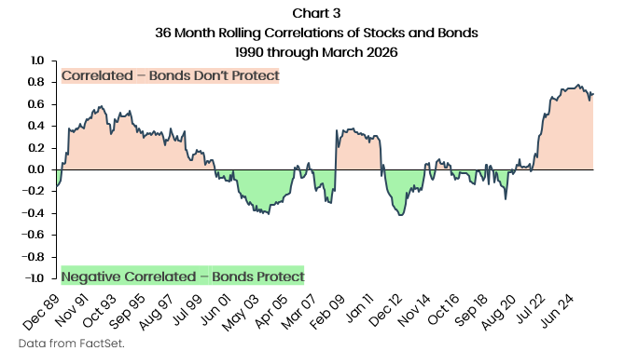
Since 2022, inflation, a constrained Fed, and substantial Treasury supply have pushed stocks and bonds into a positive correlation regime. We believe these forces are more structural in nature, and even a Fed pivot may not deliver the bond rally it once would have. Consider the following: there is $29 trillion in marketable Treasury debt outstanding; an estimated $9-10 trillion is scheduled to mature in the next 12 months; annual net issuance is expected to be $2 trillion; and the Fed is a net seller as it tries to shrink its balance sheet. With foreign investors, including central banks, trimming their purchases, the marginal buyer is price-sensitive private capital.
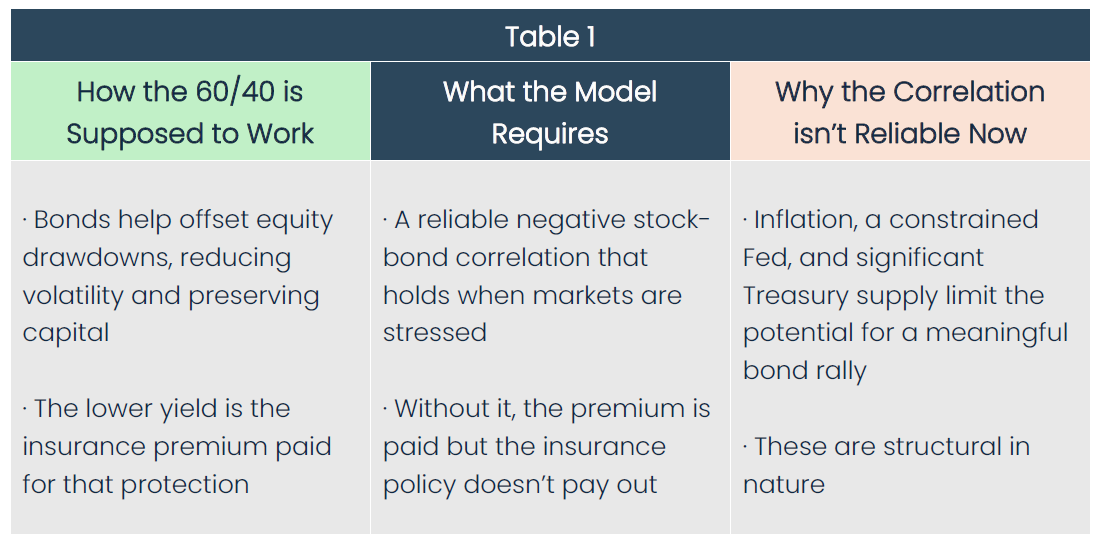
Herein lies the portfolio challenge. Investors may rationally accept a lower return from bonds in exchange for offsetting equity drawdowns, essentially paying an “insurance premium.” If bonds cannot deliver on that exchange, then does that trade-off make sense?
If the bond hedge is no longer reliable,
where can potential downside protection come from?
We believe that hedged strategies can help to serve that role over an intermediate time horizon. They have the potential to outperform bonds in stressed periods, which we define as negative months for both stocks and bonds. More important, we believe hedged strategies have the potential to significantly outperform bonds over the longer term, which can significantly contribute to the compounding of investment portfolios. Of course, the devil is in the details: successful implementation depends on relationships with high-quality managers, deep experience in research and portfolio construction, and a robust operating due diligence process. These are not easy hurdles to meet, but we believe the rewards are worth the effort. This is what motivates our team every day.
Tara Elliott
May 2026